
Why Your Cholesterol Isn’t Coming Down | Ayurveda & Stress

Eating Right, Exercising… So Why Is Your Cholesterol Still High?
“Doctor, I have stopped eating oily food. I walk every day. I am careful about what I eat. But my cholesterol is still high. Why?”
This is a question I hear quite often in clinical practice.
For many patients searching for the best Ayurvedic Hospital in Coimbatore, the expectation is simple: identify the food causing the problem, remove it, and watch the cholesterol numbers come down.
But the human body does not always work that simply.
Cholesterol is influenced by several factors — genetics, diet, body weight, physical activity, metabolic health, sleep, medications and the way the body responds to prolonged stress. So, when cholesterol remains high despite genuine efforts, it is worth looking beyond the plate.
Sometimes, the missing part of the picture is not another food restriction. It is the person's overall metabolic and emotional health.
Cholesterol Is More Than a Number
When we receive a lipid profile, our attention naturally goes to total cholesterol, LDL, HDL and triglycerides.
These numbers are important. Elevated LDL cholesterol, in particular, contributes to the development of plaque in the arteries and can increase cardiovascular risk over time.
But cholesterol does not come only from the food we eat. The body itself produces cholesterol, primarily through the liver, because cholesterol is necessary for several normal biological functions.
This is why simply eliminating every source of dietary fat does not necessarily solve the problem.
A person may be eating carefully and exercising regularly and still have an unfavourable lipid profile because other factors are influencing metabolism.
And this is where the story becomes more interesting.
When Life Itself Becomes a Source of Stress
Think about someone who has been under pressure for months.
Perhaps there are financial worries. Perhaps there is a difficult family situation. Perhaps work has become overwhelming. Or perhaps the person appears calm on the outside while constantly worrying within.
The body responds to prolonged stress through physiological systems involving hormones such as cortisol and adrenaline. Chronic stress can influence sleep, blood pressure, eating habits, physical activity and other factors associated with cardiovascular health.
This does not mean that stress is the sole cause of high cholesterol.
It means that stress can become one piece of a much larger metabolic puzzle.
That distinction is important.
Why Cholesterol Can Remain High Despite Your Efforts
In clinical practice, we sometimes see two people following broadly similar diets and activity patterns, yet their cholesterol levels are very different.
There can be several reasons.
Genetic predisposition can play an important role. Diabetes, obesity, thyroid disorders, kidney or liver conditions and certain medicines can also affect lipid levels.
Sleep is another frequently overlooked factor. Repeatedly sleeping poorly can interfere with the body's normal recovery and metabolic balance.
Therefore, when cholesterol refuses to improve, the question should not always be:
“What food am I eating?” We should also ask: “How is my body functioning as a whole?”
The Ayurvedic Perspective
This is where Ayurveda brings a broader clinical perspective.
Ayurveda does not traditionally describe modern dyslipidemia simply as “high cholesterol.” Disorders involving excessive or disturbed fat metabolism are understood through concepts such as Medo Dhatu, Medovriddhi, Medoroga, Agni and the functioning of the Medovaha Srotas.
From an Ayurvedic physician's perspective, therefore, the laboratory value is important — but it is not the entire patient.
We also look at digestion and metabolism, dietary habits, physical activity, sleep, body weight and associated health concerns. The patient's mental and emotional state and daily routine also deserve attention.
In simple terms, Ayurveda asks not only what disease the patient has, but why this particular person has developed it.
That is a very important distinction.
Stress, Mind and Metabolism
Ayurveda has always viewed the mind and body as interconnected.
When a person is continuously worried, sleeps poorly, eats irregularly and remains physically inactive, the effects do not remain confined to the mind. They can influence the entire rhythm of daily life.
Modern research is also examining the relationship between psychological stress, stress hormones, inflammation and cardiovascular risk.
This does not mean that every person with high cholesterol has “stress-induced cholesterol.”
Rather, it tells us that emotional and mental well-being should not be ignored when looking at the complete cardiovascular picture.
Can Yoga and Meditation Help?
Yoga, Pranayama and meditation should not be presented as substitutes for appropriate medical treatment. However, research suggests that mind-body practices may have beneficial effects on several cardiovascular and metabolic risk factors.
Studies have reported improvements in certain lipid parameters among people practising yoga, although the results vary between studies.
Meditation has also been studied in relation to blood lipids, with research suggesting modest improvements in some cholesterol and triglyceride measures.
The more responsible message is therefore not that yoga or meditation can “cure” high cholesterol.
It is that mind-body practices can form one useful part of a comprehensive approach to cardiovascular health.
For many patients, learning to breathe better, sleep better, move regularly and manage stress can be an important part of improving overall well-being.
Where Does Ayurvedic Management Fit In?
Ayurvedic management begins with understanding the individual rather than applying exactly the same treatment to everyone.
Depending on the person's condition, an Ayurvedic physician may consider appropriate dietary changes, lifestyle modification, Yoga and Pranayama, stress-management practices and selected Ayurvedic therapies.
Panchakarma, for example, should not be presented as a universal “cholesterol cleansing” procedure. It is a specialised Ayurvedic therapeutic approach that should be considered only after proper clinical assessment and according to the individual's suitability.
Similarly, Ayurvedic medicines should not be self-prescribed merely because a product is described as “natural.”
Responsible Ayurvedic care should be personalised, clinically supervised and, where appropriate, integrated with necessary modern medical evaluation.
What If You Are Already Taking Cholesterol Medicines?
This is particularly important.
If you have been prescribed a statin or another cholesterol-lowering medicine, do not stop or change it simply because you have started an Ayurvedic treatment, yoga practice or dietary programme.
Modern medical guidelines continue to recognise cholesterol-lowering medicines as an important part of cardiovascular risk management for appropriate patients.
Ayurveda should be used responsibly — not as a reason to discontinue necessary treatment without medical supervision.
A good physician should be interested in the complete health of the patient rather than trying to prove that one system of medicine is superior to another.
So, Why Isn't Your Cholesterol Coming Down?
There may not be one single answer.
It could be your diet. It could be genetics. It could be excess weight or metabolic imbalance. It could be diabetes or thyroid dysfunction. It could be inadequate physical activity, poor sleep or a medication.
And for some people, chronic stress may contribute to an unfavourable cardiovascular risk profile through its effects on sleep, behaviour, blood pressure and the body's stress-response systems.
The important thing is to stop looking at cholesterol as an isolated number.
Look at the person behind the number.
Look at the lifestyle behind the laboratory report.
Look at the metabolic health behind the result.
And, when appropriate, look at the mind-body connection as well.
A More Complete Way Forward
If your cholesterol remains high despite genuine efforts, perhaps it is time to move beyond the narrow question:
“What should I stop eating?” and ask a more meaningful one:
“What is my body trying to tell me?”
At Saigram Ayurveda Hospital & Research Institute, our approach is centred on understanding the individual rather than treating a laboratory value in isolation. Ayurveda offers a wholeperson perspective, while modern investigations provide important information about cardiovascular and metabolic risk.
The objective is not to promise an instant solution. It is to understand the individual, identify the factors that may be contributing to the problem and develop a sensible, personalised approach to long-term health.
If your cholesterol continues to remain high despite your best efforts, a consultation with an experienced Ayurvedic physician at Saigram Ayurveda Hospital & Research Institute — one of the institutions patients consider when looking for the best Ayurvedic Hospital in Coimbatore — may help you look at the problem from a broader perspective.
Sometimes, the answer begins when we stop looking at cholesterol as just a number and start listening to the story behind it.
Medical Note: This article is intended for general health education and should not replace individual medical evaluation. Patients taking cholesterol-lowering medicines should not discontinue or alter their treatment without consulting their treating physician.
Related Blogs

Hormones and Sleep: An Ayurvedic Approach to Restful Sleep | Saigram Ayurveda
Discover how melatonin, cortisol, thyroid, reproductive hormones and metabolism can influence sleep, and how Ayurveda approaches disturbed sleep through personalised care at Saigram Ayurveda Hospital, Coimbatore.
Read more
The Ayurvedic Art of Drinking Water: 8 Healthy Habits | Saigram Ayurveda
Discover 8 Ayurvedic habits for drinking water mindfully. Learn how proper hydration and personalised lifestyle choices can support overall wellbeing at Saigram Ayurveda Hospital, Coimbatore.
Read more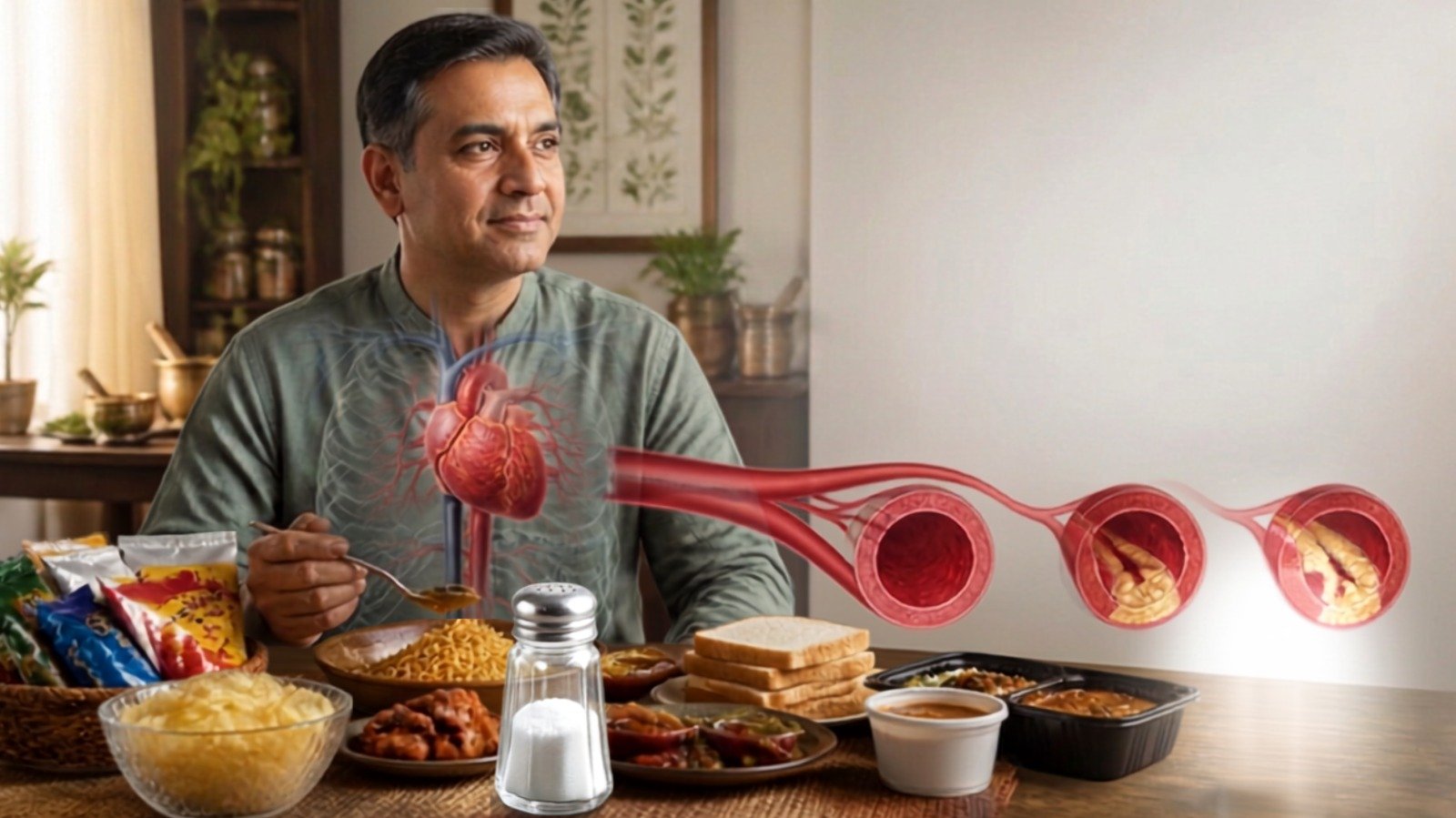
The Hidden Dangers of Salt: How Excess Sodium Silently Damages Your Heart | Saigram Ayurveda Hospital
Learn how excessive salt silently damages the heart, blood vessels, and circulation even when blood pressure appears normal. Discover the Ayurvedic perspective from the best Ayurvedic Hospital in Coimbatore and learn practical ways to protect your heart.
Read more


