
Erectile Dysfunction & Diabetes: An Ayurvedic Perspective | Saigram Ayurveda
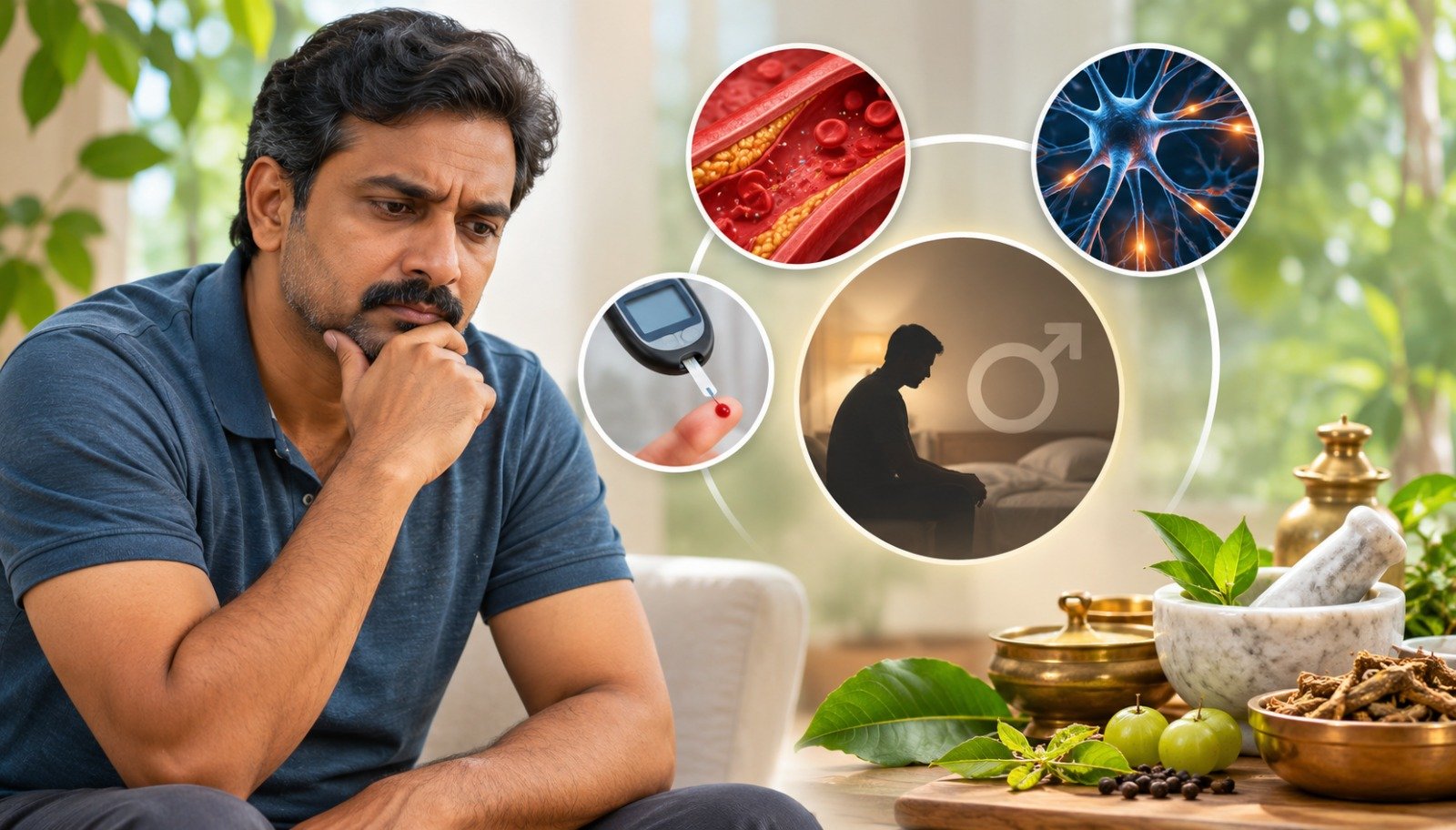
Erectile Dysfunction
Could It Be an Early Warning Sign of Diabetes? An Ayurvedic Perspective
When a Personal Concern May Reveal a Deeper Health Problem
For many men, erectile dysfunction (ED) is a difficult subject to discuss, even with a doctor. It is often attributed to ageing, work-related stress, relationship difficulties or temporary physical exhaustion. Some men quietly accept it as an inevitable part of growing older, while others look for quick solutions without investigating the underlying cause.
However, erectile dysfunction sometimes has a much deeper explanation. It can be an early indication of metabolic disturbances, including prediabetes and diabetes, even before the more familiar symptoms of elevated blood sugar become apparent.
At the best Ayurvedic Hospital in Coimbatore, we believe that understanding the underlying factors behind a health problem is an important part of responsible healthcare. Erectile dysfunction should not always be viewed as an isolated sexual health concern. In certain individuals, it may be a signal that blood circulation, nerve function, hormonal balance or metabolic health needs closer attention.
Understanding this connection through both modern medical knowledge and the principles of Ayurveda can help men recognise warning signs early and seek appropriate care.
Understanding the Connection Between Diabetes and Erectile Dysfunction
An erection is a coordinated physiological process involving the brain, nervous system, blood vessels, hormones and psychological well-being. When a man experiences sexual stimulation, nerve signals trigger relaxation of the smooth muscles within the erectile tissue. This allows blood to flow into the penis and produce an erection.
For this process to function properly, the blood vessels must remain healthy and the nerves must transmit signals effectively.
Diabetes can gradually interfere with both these mechanisms.
Persistently elevated blood glucose can damage the delicate lining of blood vessels, affecting their ability to dilate and supply adequate blood. Over time, diabetes may also cause diabetic neuropathy, a condition in which the nerves responsible for sensation and physiological responses become damaged.
Consequently, a man may experience difficulty achieving or maintaining an erection.
The National Institute of Diabetes and Digestive and Kidney Diseases (NIDDK) recognises changes in blood vessels, nerves, hormones and emotional health as important contributors to sexual difficulties in men with diabetes.
This explains why erectile dysfunction may sometimes appear alongside metabolic problems, even when other symptoms are not obvious.
Why Erectile Dysfunction Should Never Be Ignored
One of the most important aspects of erectile dysfunction is that it can occasionally precede the diagnosis of other health conditions.
A man may not experience excessive thirst, frequent urination, unexplained weight changes or persistent fatigue. His fasting blood glucose may also appear only mildly elevated. Yet, underlying metabolic disturbances may already be developing.
The relationship between erectile dysfunction and cardiovascular health deserves particular attention. The blood vessels supplying the penis are relatively small, and changes in vascular health may become noticeable there before symptoms develop elsewhere.
This does not mean that every man with ED has diabetes or heart disease. However, medical evidence recognises ED as a potential marker of underlying cardiovascular disease and other health conditions that may require evaluation.
Men experiencing persistent erectile difficulties should therefore consider a comprehensive health assessment rather than relying exclusively on medication for temporary symptom relief.
The Deceptive Nature of Borderline Blood Sugar Levels
One reason metabolic disorders often go unnoticed is that their early stages may produce very few symptoms.
Consider a man whose fasting blood glucose is around 105 mg/dL. He may assume that the reading is almost normal and therefore nothing to worry about. However, this value falls within the impaired fasting glucose range.
Similarly, an HbA1c result of 5.9% indicates prediabetes, not established diabetes.
HbA1c provides an estimate of average blood glucose over approximately two to three months. According to accepted diagnostic criteria:
- Below 5.7% – Normal range
- 7% to 6.4% – Prediabetes range
- 5% or above – Diabetes range, subject to appropriate diagnostic confirmation
Prediabetes indicates an increased risk of developing Type 2 diabetes and cardiovascular complications. It is an important opportunity to assess metabolic health and introduce appropriate interventions before the condition progresses.
A normal-looking fasting glucose result alone does not always tell the complete story. Depending on the individual's circumstances, a doctor may recommend HbA1c testing or an oral glucose tolerance test.
The important lesson is simple: do not dismiss persistent sexual health changes or borderline blood sugar readings.
Understanding Erectile Dysfunction Through the Ayurvedic Perspective
Ayurveda approaches health by examining the balance between the body's functional principles, tissues, digestive processes and physiological channels.
Diabetes is traditionally discussed under the broader category of Prameha, with Madhumeha representing an important condition within this group.
From an Ayurvedic perspective, the development of metabolic disorders is associated with disturbances involving Doshas, particularly Kapha, along with changes in Meda Dhatu (adipose tissue), impaired Agni (digestive and metabolic processes) and the accumulation of Ama (incompletely processed metabolic products, in Ayurvedic terminology).
As the condition progresses, Vata and other functional disturbances may also become relevant.
How does this relate to erectile health?
Ayurveda considers Shukra Dhatu an important tissue associated with reproductive function. Its nourishment is understood in relation to the health and proper functioning of the preceding Dhatus, including Rasa and Rakta.
When digestion, metabolism, tissue nourishment and circulation are disturbed, the body's overall reproductive health may also be affected.
Vata plays an important role in movement, nerve-related functions and physiological coordination. Disturbances in Vata may therefore be considered while assessing certain sexual health complaints.
It is important to understand that these Ayurvedic concepts provide a traditional framework for clinical assessment. They are not direct equivalents of modern diagnoses such as diabetic neuropathy, vascular insufficiency or hormonal deficiency.
An Ayurvedic physician considers the individual's Prakriti, Vikriti, Agni, lifestyle, dietary habits and clinical presentation before determining an appropriate management approach.
Why a Holistic Approach Matters
Treating erectile dysfunction without investigating its underlying cause may leave important health concerns unaddressed.
For example, a man experiencing ED may also have abdominal obesity, elevated triglycerides, hypertension, insulin resistance, poor sleep or chronic psychological stress. These factors may contribute individually or collectively to his condition.
A comprehensive assessment should therefore look beyond the immediate symptom.
Modern medical evaluation may include blood glucose testing, HbA1c, lipid profile, blood pressure assessment and hormonal investigations such as morning testosterone measurement, depending on the clinical findings.
From an Ayurvedic perspective, the physician may additionally assess the individual's constitutional characteristics, digestive health, dietary patterns, daily routine and functional imbalances.
This combined understanding helps ensure that the management plan addresses the person's overall health rather than concentrating on a single complaint.
Ayurvedic Management: Restoring Metabolic Balance and Supporting Reproductive Health
Ayurveda emphasises individualised treatment rather than applying the same therapeutic approach to every patient.
In a person experiencing erectile dysfunction alongside metabolic disturbances, the management strategy should consider the underlying condition, the severity of symptoms, age, constitution and associated health concerns.
Depending on the physician's assessment, the approach may incorporate the following elements.
1. Correction of Dietary Habits (Ahara)
Diet plays an important role in metabolic health. Excessive consumption of refined carbohydrates, highly processed foods and calorie-dense meals may contribute to weight gain and poor glucose regulation.
An appropriate dietary plan should emphasise balanced meals, adequate fibre, suitable protein intake and portion control, taking into account the individual's metabolic requirements.
2. Improvement of Daily Routine (Dinacharya)
Physical inactivity and irregular daily habits can adversely affect metabolic health. Regular walking, suitable physical activity and maintaining a healthy body weight can support glucose regulation and cardiovascular function.
Adequate sleep and stress management are equally important.
3. Individualised Ayurvedic Therapies
Depending on the patient's clinical condition, an Ayurvedic physician may consider appropriate internal medicines, external therapies and other traditional interventions.
The selection of medicines and procedures should be based on individual assessment, safety considerations and possible interactions with existing medication.
4. Supporting Reproductive Health
Ayurveda recognises Vajikarana as a specialised branch concerned with reproductive and sexual health. Its traditional principles emphasise nourishment, vitality and reproductive wellbeing.
However, erectile dysfunction associated with diabetes or vascular and neurological problems requires careful evaluation. No single Ayurvedic formulation or therapy should be considered a guaranteed solution.
The objective is to support overall health through a medically responsible and personalised management programme.
Practical Steps Every Man Above 40 Should Consider
Erectile dysfunction becomes more common with advancing age, but it should not automatically be dismissed as an unavoidable consequence of ageing.
Men above 40, particularly those with a family history of diabetes, abdominal obesity, hypertension or sedentary lifestyles, should pay attention to changes in their sexual and metabolic health.
A few important precautions can make a meaningful difference:
Do not ignore persistent erectile difficulties or rely entirely on temporary symptom-relieving medication.
Check blood glucose and HbA1c when advised by your doctor, particularly if metabolic risk factors are present.
Maintain regular physical activity and a healthy body weight.
Have blood pressure, cholesterol and cardiovascular risk factors assessed.
Discuss existing medications with your treating doctor if you suspect they may be contributing to sexual difficulties. Never discontinue prescribed medicines independently.
Seek medical advice if erectile dysfunction persists, rather than postponing an evaluation because of embarrassment.
Early attention can help identify associated health conditions and provide an opportunity for appropriate management.
Listen to What Your Body Is Telling You
Erectile dysfunction is not always merely a sexual health problem. In some men, it may be an early indication of changes taking place within the body's metabolic, vascular or neurological systems. Recognising this connection can encourage timely investigation and prevent important warning signs from being overlooked.
Ayurveda offers a holistic perspective that considers digestive health, tissue nourishment, Dosha balance, lifestyle and reproductive well-being. When supported by appropriate modern diagnostic evaluation and responsible medical care, this perspective can contribute to a more comprehensive approach to individual health management.
At Saigram Ayurveda Hospital & Research Institute, Coimbatore, our approach places importance on understanding the individual, identifying contributing factors and developing appropriate, personalised Ayurvedic management strategies.
If you or someone close to you is experiencing persistent erectile difficulties, borderline blood sugar levels or concerns about metabolic health, consider seeking a professional consultation rather than allowing embarrassment to delay care.
A timely conversation with an experienced physician can be the first step towards better health. We welcome you to visit Saigram Ayurveda Hospital & Research Institute, Coimbatore, to discuss your concerns and explore an appropriate course of care.
Related Blogs

Why Your Cholesterol Isn’t Coming Down | Ayurveda & Stress
Why does cholesterol stay high despite diet and exercise? Understand the role of stress, metabolism, lifestyle and Ayurvedic care in cholesterol management.
Read more
Hormones and Sleep: An Ayurvedic Approach to Restful Sleep | Saigram Ayurveda
Discover how melatonin, cortisol, thyroid, reproductive hormones and metabolism can influence sleep, and how Ayurveda approaches disturbed sleep through personalised care at Saigram Ayurveda Hospital, Coimbatore.
Read more
The Ayurvedic Art of Drinking Water: 8 Healthy Habits | Saigram Ayurveda
Discover 8 Ayurvedic habits for drinking water mindfully. Learn how proper hydration and personalised lifestyle choices can support overall wellbeing at Saigram Ayurveda Hospital, Coimbatore.
Read more


